The Best SLS 3D Printers in 2026 for Small Businesses and Labs
SLS 3D printers explained for makers moving up from FDM or resin: Formlabs Fuse 1+ 30W, Sinterit Lisa X, Sintratec S3, EOS Formiga P 110, and print services.
By Depthue Lab2 min read
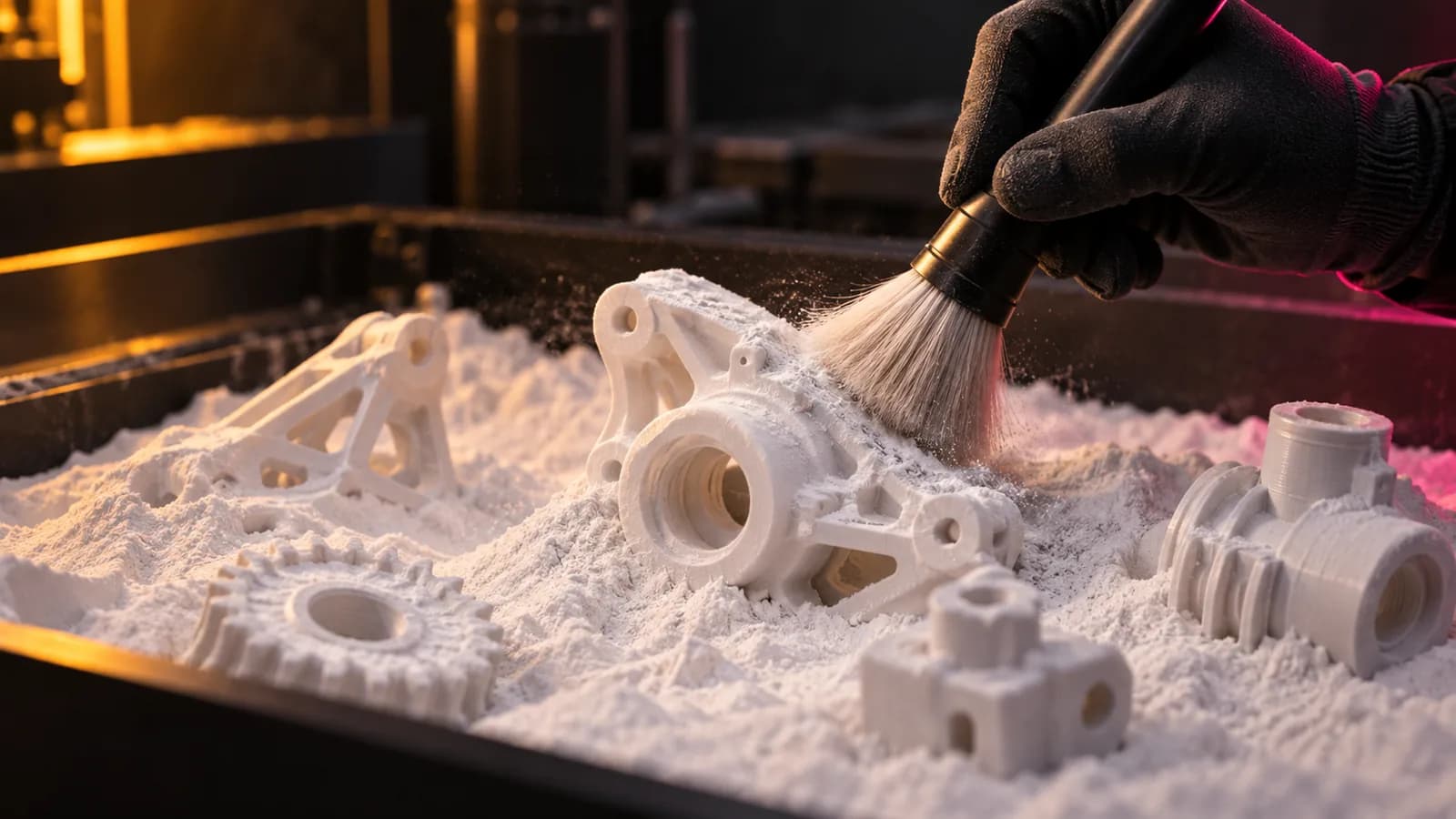
If you have outgrown FDM for functional parts, or resin for anything that has to take a load, selective laser sintering is the next step. SLS spreads a thin layer of nylon powder, fuses the part's outline with a laser, and repeats. The loose powder around the part holds it up, so there are no supports, and parts can be packed in three dimensions to fill the whole build chamber.
Why makers and small shops move to SLS
- No supports. Complex, interlocking and moving parts print in one go.
- Strong, even parts. Nylon SLS parts behave much more consistently in every direction than FDM.
- Batch production. Nesting dozens of parts in one build makes short runs economical.
- A professional finish. Slightly matte and grainy, easy to dye.
The trade-offs are cost, powder handling and space. Budget for the whole workflow: powder, a depowdering station, sieving and recycling, and ventilation.
The shortlist
| Printer | Build volume | Typical materials | Good for |
|---|---|---|---|
| Formlabs Fuse 1+ 30W | 165 x 165 x 300 mm | Nylon 12, Nylon 11, glass and carbon-filled nylons, TPU 90A | Workshops that want a full ecosystem |
| Sinterit Lisa X | 130 x 180 x 330 mm | PA12, PA11 variants, PP, flexible TPU | Compact, open-material benchtop SLS |
| Sintratec S3 | Modular | PA12 and others | Labs that want to upgrade in modules |
| EOS Formiga P 110 Velocis | 200 x 250 x 330 mm | Industrial nylons | Production environments |
Formlabs Fuse 1+ 30W
The Fuse 1+ 30W uses a 30 W fiber laser and a 165 x 165 x 300 mm build volume, with a range of powders from standard and tough Nylon 12 to Nylon 11, glass- and carbon-filled grades and TPU 90A. Its strength is the ecosystem: the Fuse Sift depowdering station, powder recycling and PreForm software all come from one vendor.
Sinterit Lisa X
The Lisa X is a compact SLS printer with a build size up to 130 x 180 x 330 mm for rigid materials. Sinterit quotes 10 to 14 mm per hour of build height in PA12 and a broad, open list of powders including PA12 and PA11 variants, polypropylene and flexible materials. It suits shops that want benchtop SLS with more material choice.
Sintratec S3
Sintratec's S3 is a modular system: printing, depowdering and material handling are separate modules you can add as you grow. That makes it attractive to universities and R&D labs.
EOS Formiga P 110 Velocis
EOS makes industrial SLS systems, and the Formiga P 110 Velocis is its compact production machine with a 200 x 250 x 330 mm build envelope. It sits in a different price and facility class from benchtop printers and is built for repeatable production.
Buy or outsource?
A print service is cheaper until you print often. Order from a service when you need a few parts a month, when you are still validating a design, or when you want a material your printer cannot run. Buy when you iterate daily, need parts within hours, or cannot send designs outside the company.
Preparing files for SLS
SLS services and printers accept STL and 3MF. Check wall thickness (usually at least 0.8 to 1 mm), add escape holes to hollow parts so powder can drain, and confirm the scale before you order. The free STL viewer shows dimensions and volume, which also lets you estimate material cost.
Free tools for this job
Frequently asked questions
What is SLS 3D printing?
Selective laser sintering spreads thin layers of polymer powder, usually nylon, and fuses each layer's cross-section with a laser. The unfused powder supports the part, so no support structures are needed.
What is the best SLS printer for a small business?
Compact benchtop systems such as the Formlabs Fuse 1+ 30W and the Sinterit Lisa X are the most common choices. They fit a workshop, print engineering nylons and cost far less than industrial SLS machines.
Is SLS stronger than FDM?
Generally yes, and more consistent in every direction. SLS nylon parts do not have the layer-line weakness of FDM prints, which makes them suitable for functional parts, clips and housings.
Should I buy an SLS printer or use a service?
If you need fewer than a few builds a month, a print service is usually cheaper. Owning pays off when you print often, iterate quickly or cannot share designs outside your company.